Tradition· Japan · 17th century – present
Imari / Arita
Export porcelain. Japan meets European desire.
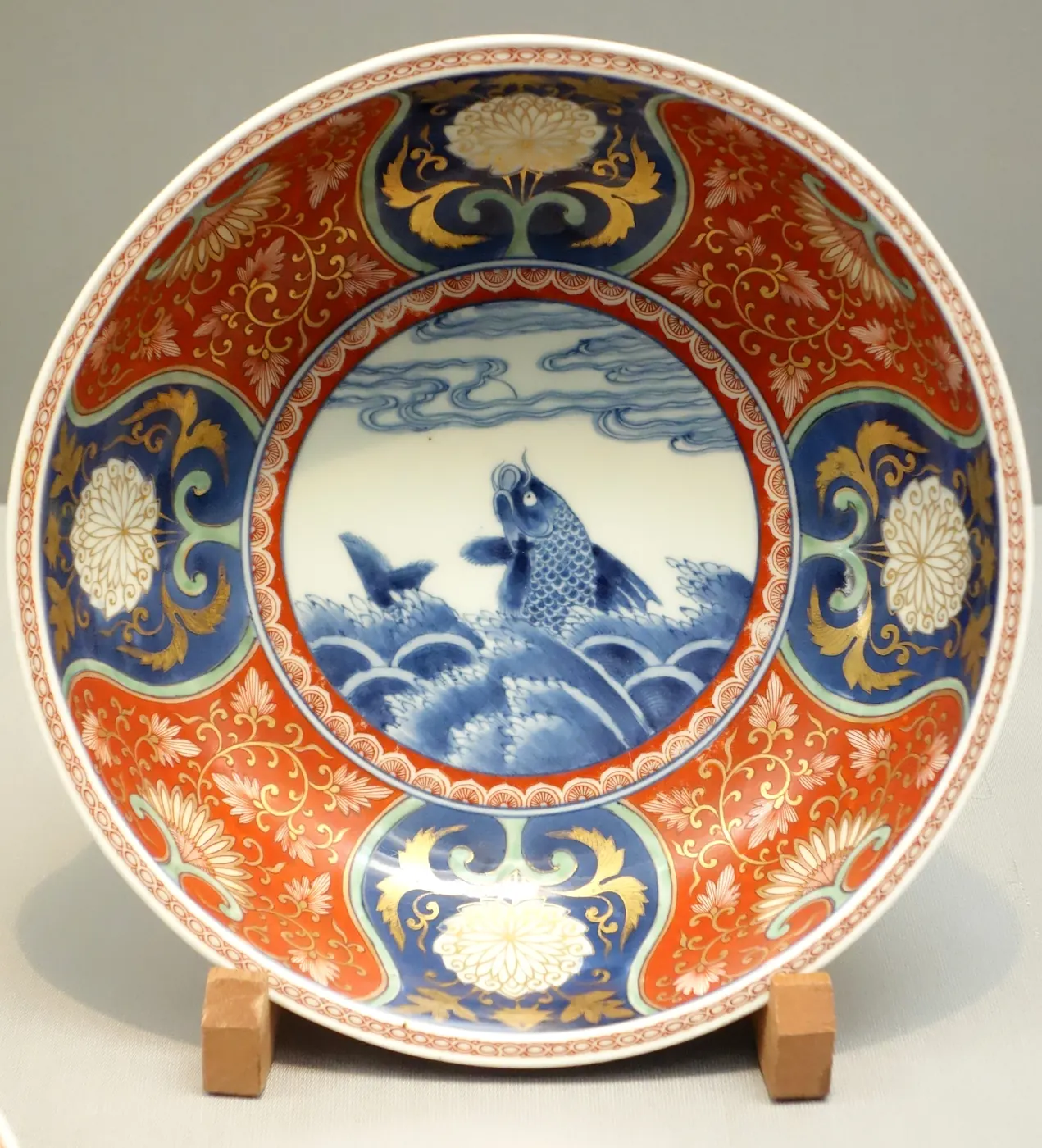
When Dutch traders needed porcelain and China was in chaos, Japanese potters filled the gap—and changed decorative arts forever.
In the early 17th century, Korean potters brought to Japan discovered porcelain stone near Arita in Kyushu. When Chinese exports collapsed during the Ming-Qing transition, Dutch traders turned to Arita to fill European demand. The result was 'Imari': boldly decorated porcelain featuring underglaze blue, overglaze red enamel, and gilding. European aristocrats couldn't get enough. The 'Kakiemon' style—delicate, asymmetrical, with ample white space—became particularly prized.
How does demand shape what makers create?