Technique
Raku Firing
Hot from the kiln. Smoke and metal.
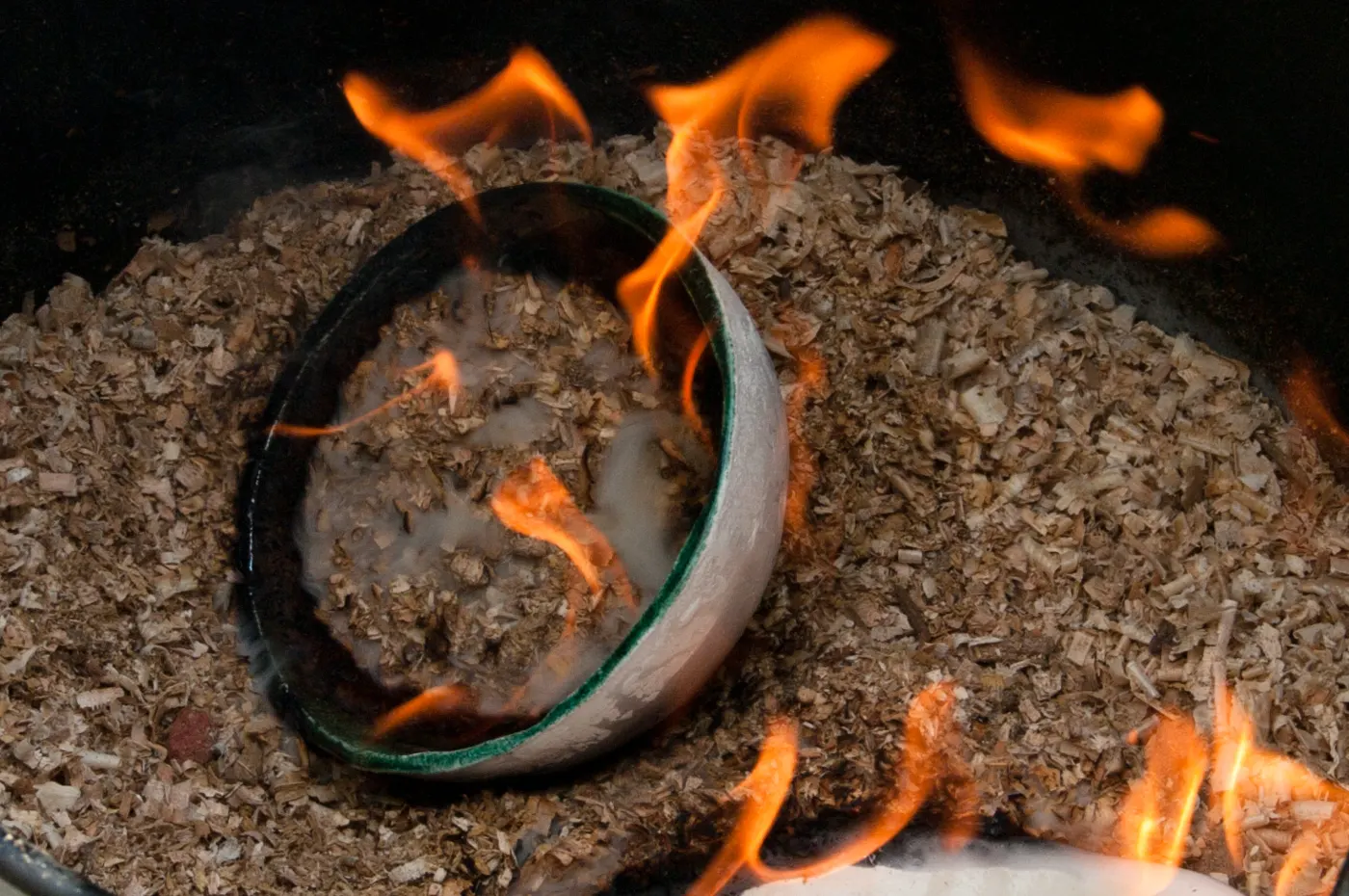
Pulling red-hot pots from the kiln and smoking them in sawdust.
Raku began in 16th-century Kyoto with tea bowls fired quickly and pulled from the kiln. American potters, led by Paul Soldner in the 1960s, added post-firing reduction: hot pots go into a can of sawdust or paper, which flames, then is closed. Glazes crackle and the cracks turn black, and copper glazes flash with metallic lustre.
It is fast, theatrical and outdoors, and needs a clay body that tolerates thermal shock. Pots are decorative, not for food.
What does speed bring out that a slow firing hides?
Try it in the studio
Many Bay Area studios run raku nights; bring bisqued pots in a raku-friendly body and try a white crackle and a copper matte.