Surface
Volcanic
When glazes boil and crater.
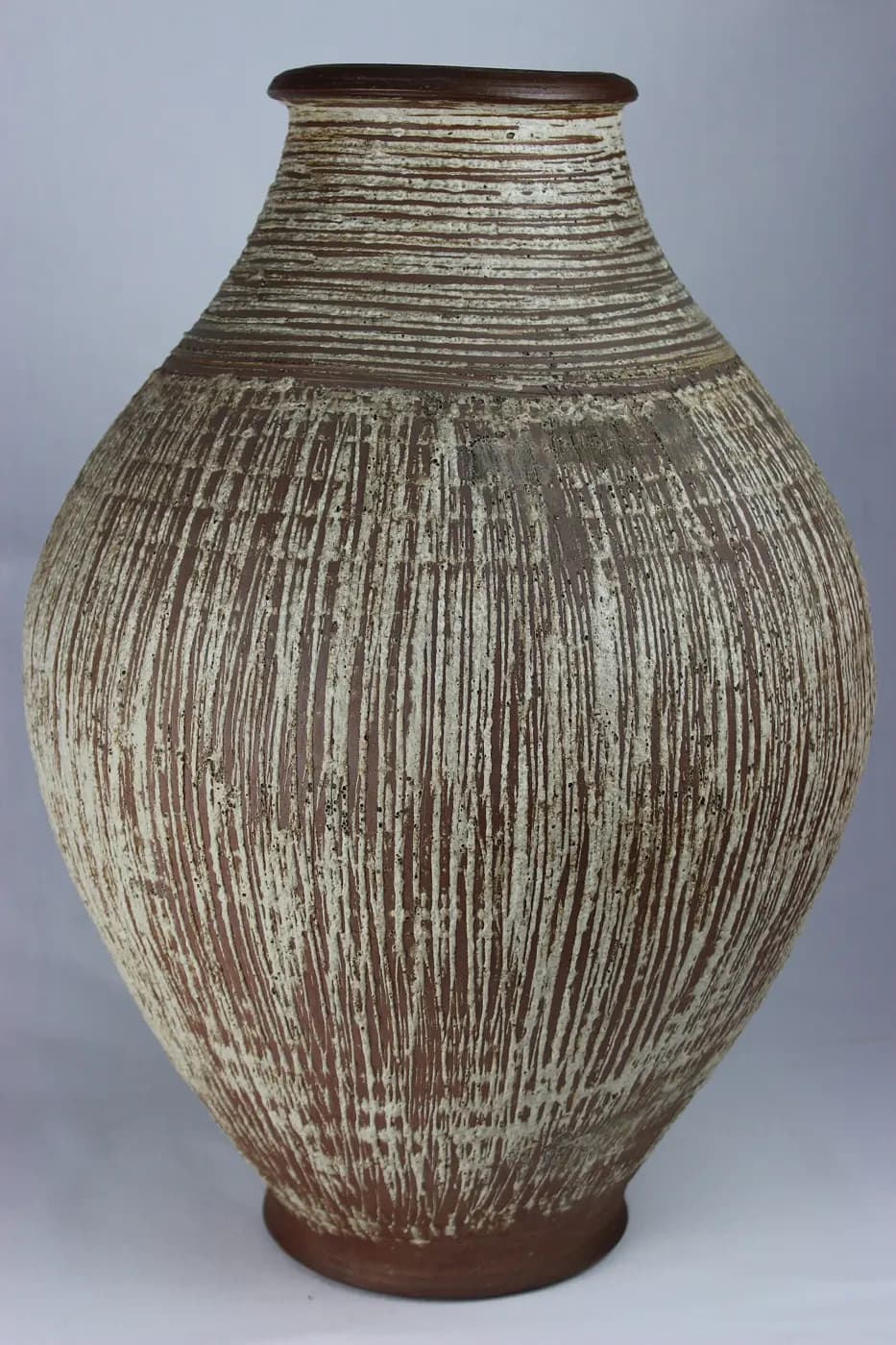
A surface that looks as if it boiled and froze in the moment of cooling.
Volcanic or crater glazes trap gas as they melt. Silicon carbide added to a glaze gives off gas in the firing and leaves bubbles and craters; very high-calcium or underfired glazes can blister on their own. Thick application and a fast cool freeze the bubbles in place.
The result is pitted, lunar and tactile: beautiful on sculpture and planters, poor on anything that touches food or lips, because the craters hold dirt and can be sharp.
When does a 'fault' become the whole point?
Try it in the studio
Add about 1 to 2 percent silicon carbide to a glaze you know and fire a test tile thick and thin; keep it for outsides and sculptural work.