Surface
Salt Glaze
Fire and salt, married in the kiln.
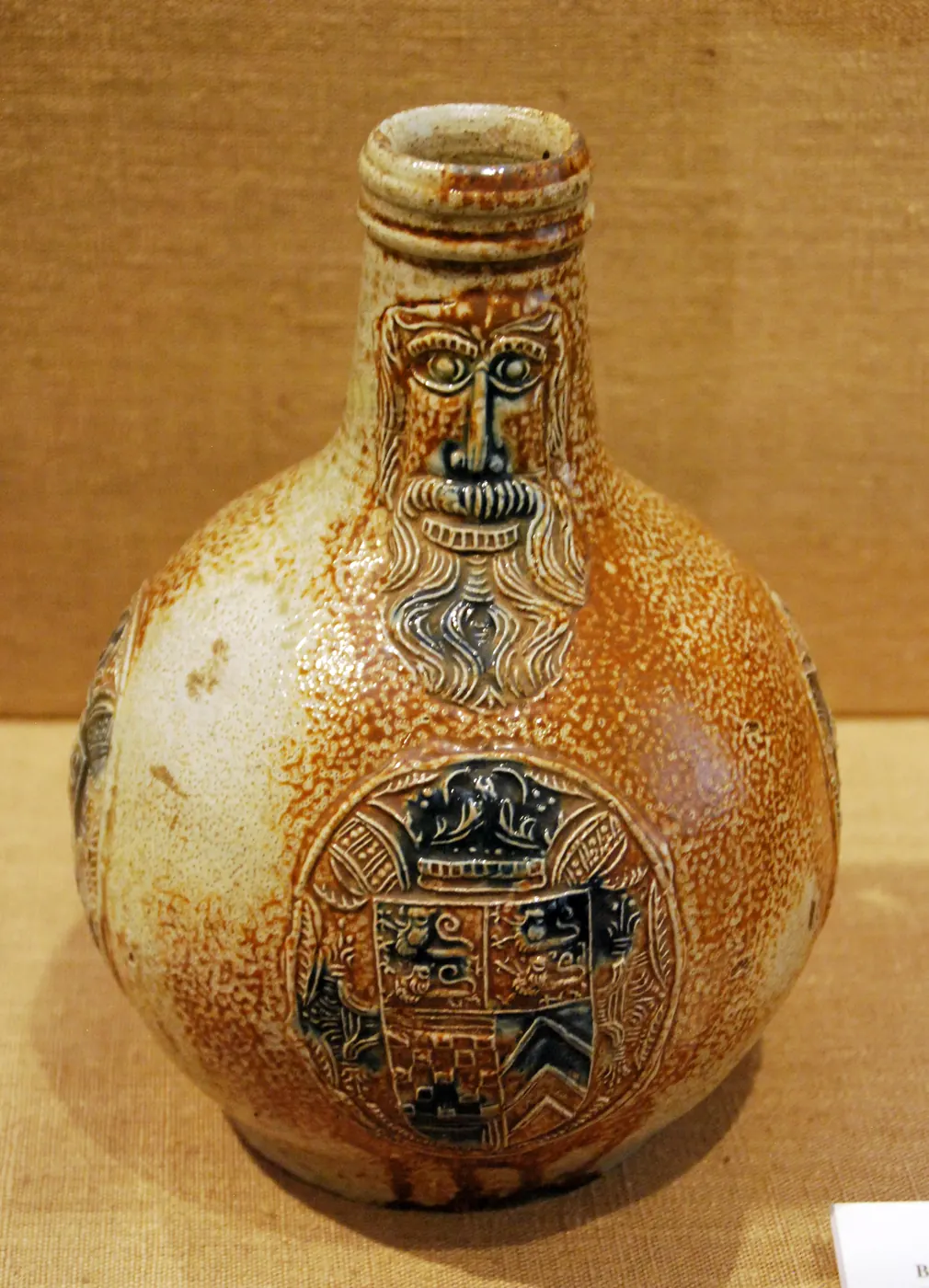
Glaze made by throwing salt into a red-hot kiln.
At about 1,250°C, salt thrown into the firebox turns to vapour, and the sodium reacts with silica in the clay to form a thin glaze on every exposed surface. The result has an orange-peel texture, a soft sheen and colour that depends on the clay and any slips beneath.
German potters developed salt glaze in the 15th century and it became the classic finish for jugs and crocks in Europe and America. It needs a dedicated kiln, because the salt glazes the kiln itself; soda firing is a related, less corrosive method.
What would it be like for the whole kiln to glaze your work?
Try it in the studio
Look for a soda or salt kiln community firing; many studios that have one let members put work in for a fee.