Surface
Oil Spot
Stars in a black bowl.
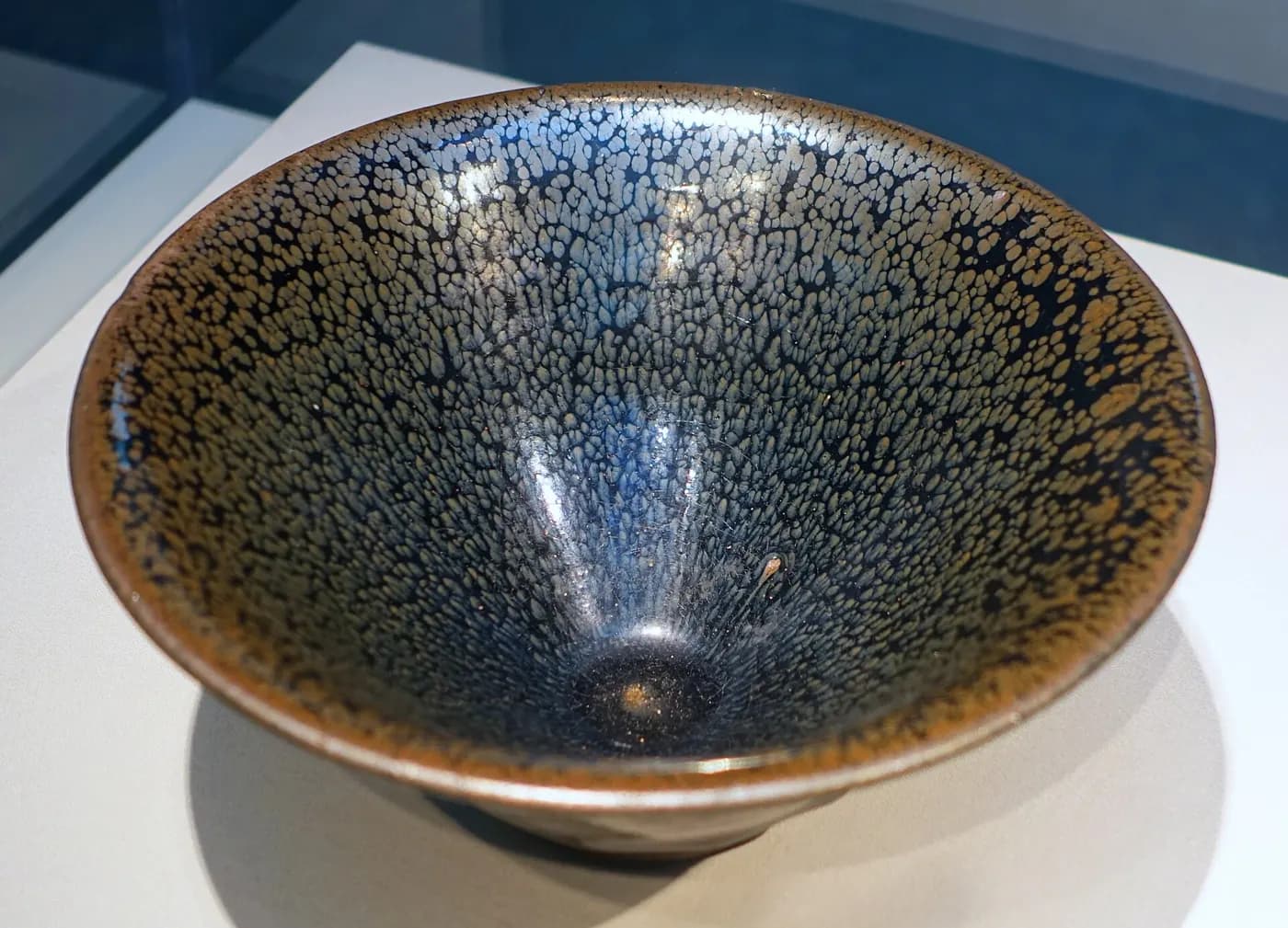
A black glaze scattered with silver spots, like drops of oil on water.
Oil-spot comes from Song dynasty Jian ware. During firing, iron oxide releases oxygen and bubbles rise through the glaze, carrying iron to the surface where it crystallises as metallic spots on the black ground. The most prized example, the yohen tenmoku bowls in Japan, are national treasures.
It needs a high-iron, thick glaze and a carefully controlled firing; modern potters have made reliable versions at cone 10 and even cone 6.
What would you make if one bowl could hold a whole night sky?
Try it in the studio
Test a published cone 6 oil-spot recipe very thick on a tile; it is one of the more achievable 'special' glazes in an electric kiln.