Surface
Carbon Trap
Smoke captured mid-escape.
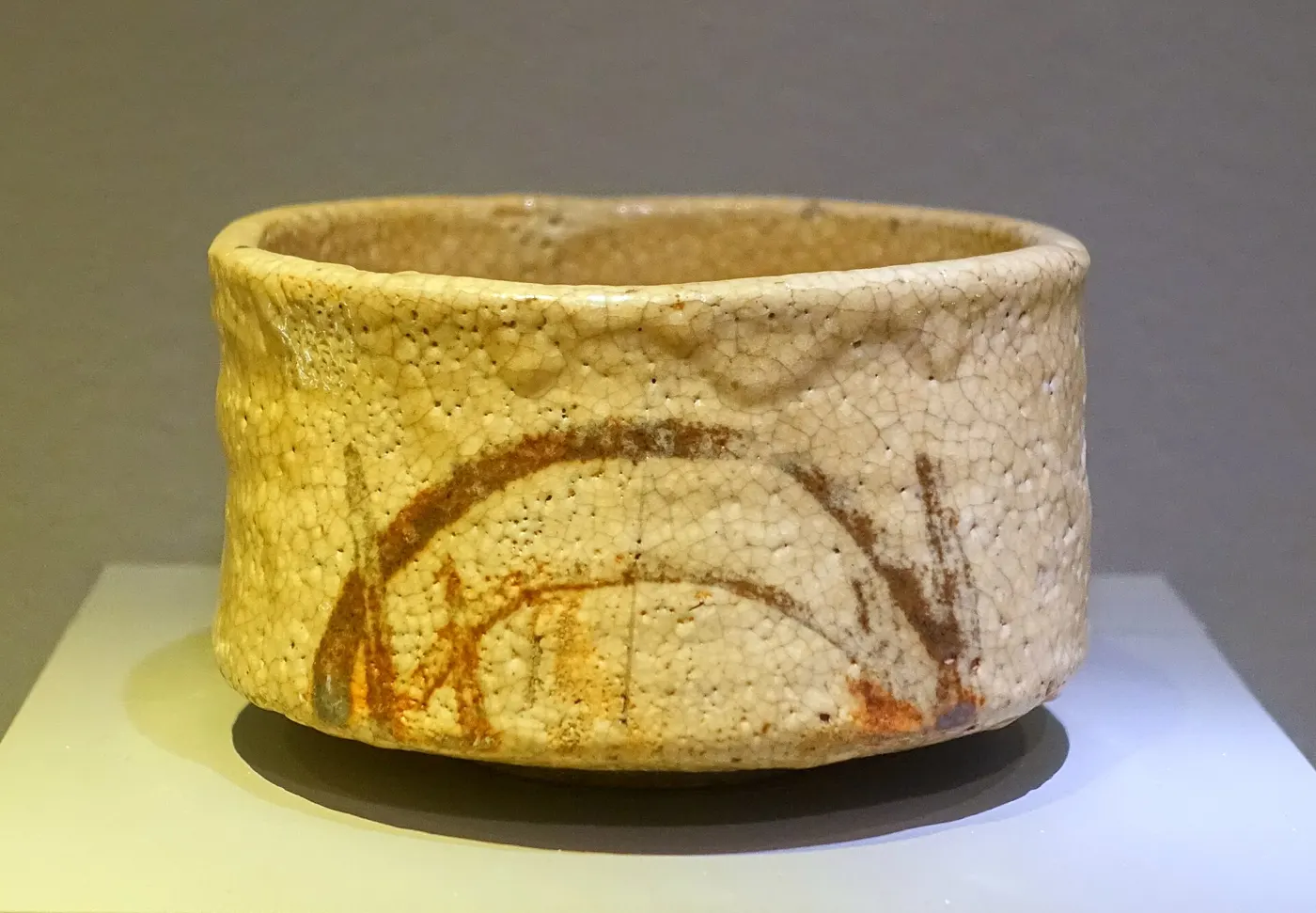
Grey and black smoke caught inside a glaze for good.
Carbon trapping happens when a glaze containing soda ash or other soluble sodium melts early in a reduction firing, sealing carbon from the smoky atmosphere into the surface. It shows as grey shadows and black flecks, especially in Shino glazes.
It depends on timing: heavy reduction early, before the glaze seals, is what captures the carbon, which is why results vary across the kiln.
What marks of the making process would you like to keep visible?
Try it in the studio
This only happens in gas or wood reduction; ask at a cone 10 reduction studio to try a carbon-trap Shino with early body reduction.